
These are my notes from a panel I attended at Fanime 2015. The speaker was Nick Rowe from Dr. Comics and Mr. Games.
At a high level, the reasons most comic stores carry little or no manga come down to
- Lack of knowledge about manga
- Lingering fears from the fall of Tokyopop
- Concerns about unmovable inventory
- Wholesale discounts being very inferior to Marvel/DC (30-40% vs 60%)
- The primary distributor doesn’t reliably restock back issues
Lack of knowledge about manga basically comes down to not knowing much about manga titles and how potential buyers are likely to react to any of them. This ties in with the second and their points. Tokyopop’s legacy is that they got books into Borders by meeting Borders’s demands that manga be both cheaper and have a uniform trim size. However, Tokyopop wasn’t always very discriminating in its licensing decisions – many comics retailers have a lingering fear of Tokyopop’s license shotgunning.
Another issue retailers fear related to the Tokyopop/Borders integration are “manga cows“, folks (mostly younger) who camp out in the aisles reading whole books without actually buying anything – these were noticeable presence at Borders stores, and are a problem insofar as their reading books without buying them means that even if a comic book store picks up a title that has a potential audience, if the audience isn’t willing to pay for the books the store gets stuck with books that don’t move. Advice for stores: focus on stocking manga that large bookstores like Barnes & Noble don’t carry.
[My notes don’t say anything about whether this was discussed, but comic stores buy books on a non-returnable basis, unlike book stores; this means that if they pay for a book and it doesn’t sell the money they spent on it is a loss. This non-returnable buying drives a lot of decision-making in comics retailing and is a larger topic than could fit here even if I were qualified to write about it – if you’re interested you may want to read some of Brian Hibbs’s writing on comics retailing at Comic Book Resources].
Diamond Comics issues
Diamond Comics is the distributor to comic stores; they’re effectively a monopoly. This means that an issue with Diamond is an issue with the comics retailing business all across the US. Here are some of those issues:
First, Diamond’s shipping practices…
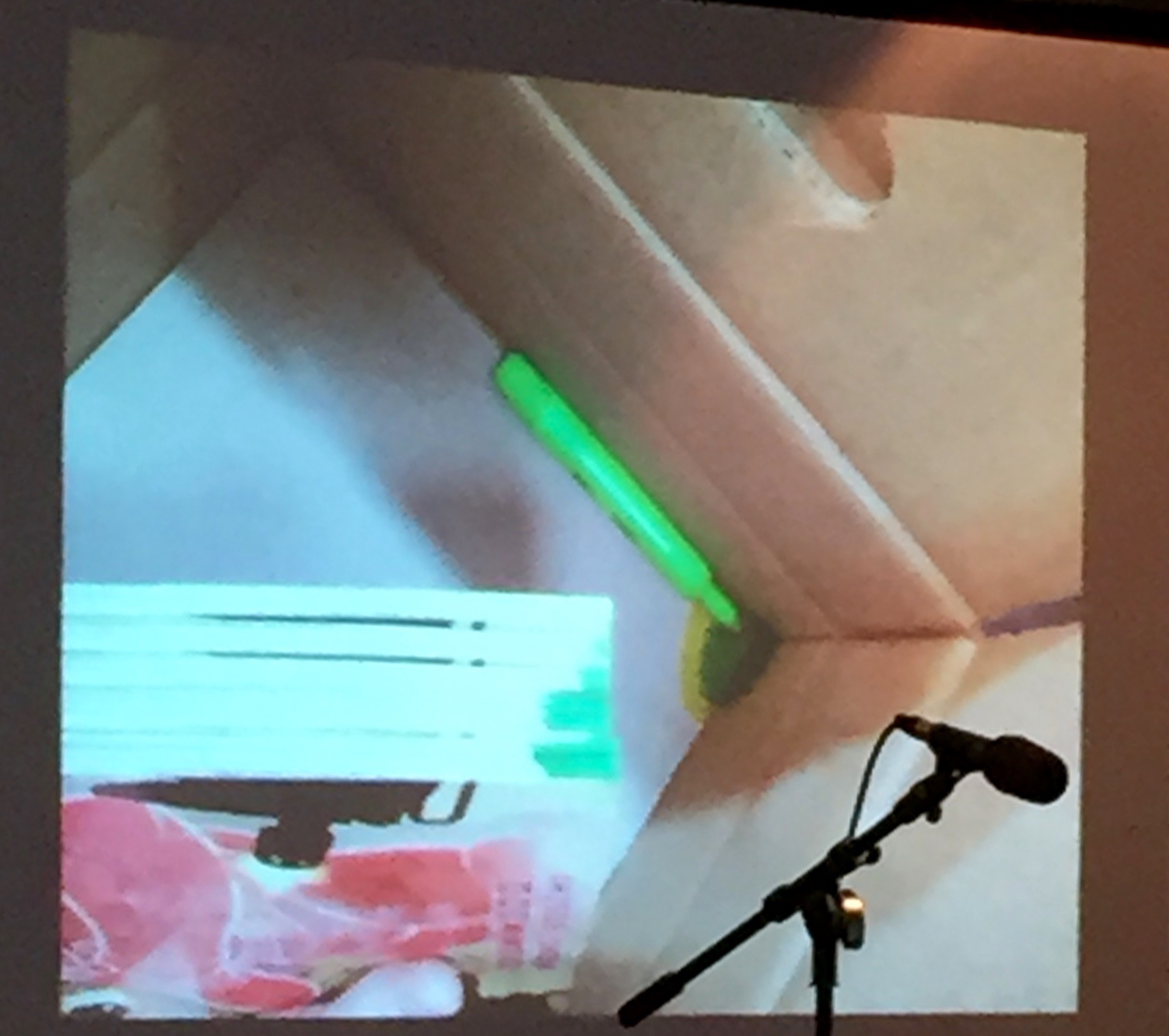
In the photo above, you can probably see how the open highlighter that ended up i the box ended up staining several books. In other shipments from Diamond the panelist or others working at his store have found half-eaten sandwiches and food wrappers. At other times some boxes were sent mostly empty to inflate shipping charges. Sometimes shipments are late.
Sometimes shipments don’t show up AT ALL. If you’re lucky and on top of things replacements may show up by Friday the same week; other times the delay can be a week or more.
Their backorder/reordering system “is a disaster” – a reorder can take 6 months to be filled. This is a problem because Diamond solicits books (via their catalog Previews) 3 months in advance, so the retailer usually only has one shot when it comes to placing orders – they need to forecast sales very effectively. Backordered books – ones that Diamond doesn’t have in stock to ship out on an order from a retailer – are also a challenge because Diamond usually won’t restock unless the publisher PAYS to re-solicit the book with Diamond (yes, publishers have to pay to be listed in the Previews catalog). Worse still, Diamond doesn’t provide any notification when a title is no longer backordered – it’s up to retailers to keep track of what becomes available again.
These backorder issues are largely due to failures of communication between Viz, publisher Simon & Schuster, and Diamond. Nobody’s taking the initiative to fix things, either. Nick would like to talk to brand managers at manga publishers besides Viz (Kodansha, Viz, Yen, etc.) in the hope that they could start working on some sort of improvements.
If Diamond is so bad, why not try ordering directly? Well, the theoretical benefit of Diamond is centralized ordering. Trying to order direct quickly becomes a job of its own. What’s worse: it can generally only be done quarterly rather than monthly – the retailer needs even stronger predictive ability in terms of figuring out how much of each title to order and when to reorder. It also requires high volume in order to be even slightly cost-effective; for example, ordering from Hachette (the company behind the Yen Press imprint) requires a $4000 commitment for the intial order, with $2000/month thereafter.
What we (customers) can do
- Ask for manga from comic stores
- Upbraid or abandon comic stores that won’t even try to handle special orders
- Point librarians interested in expanding their manga collections toward comic stores
- According to Nick, preordering a title you like helps comic stores gauge potential demand for that title just as well as it does for bookstores, so preorder titles you’d like to see stocked (much as Ed Chavez from Vertical Comics encourages people to do with bookstores).
Miscellaneous Notes
- Comic stores account for about 13% of Vertical Comics overall sales (per Vertical’s now-closed ask.fm account).
- Amazon is “really awful for book industry”
- Distributors other than Diamond exist and are good (e.g. the LA-based AAA Anime), but they don’t offer anywhere near the discounts Diamond does – it’s hard to make things work out financially due to the lesser discounts.
 Percent Liar